How Wearable Sensors Improve Injury Prediction
Published
December 12, 2024
7
min read
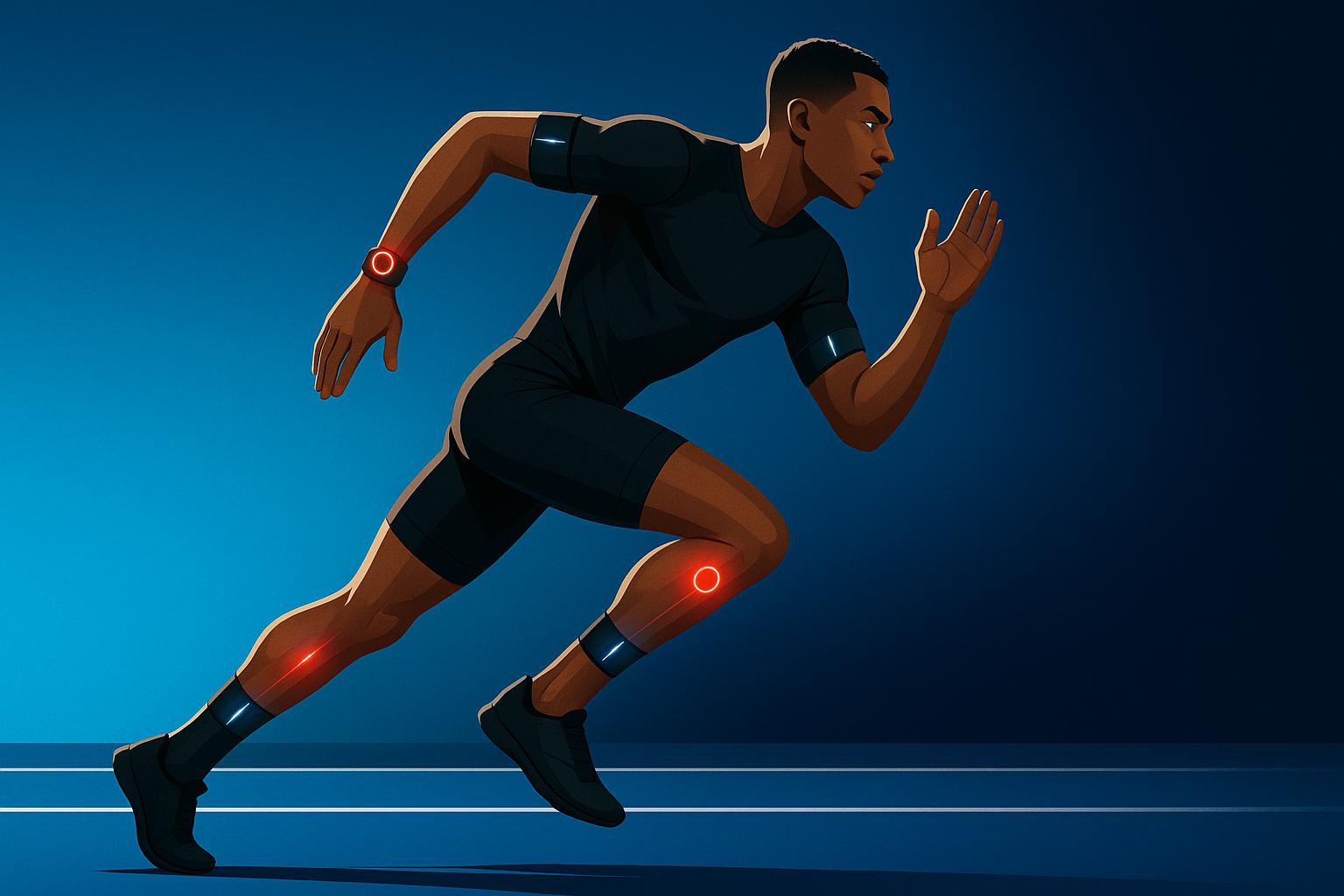
Wearable sensors are transforming how injuries are prevented in sports and fitness. They monitor real-time movement and biometric data to detect risks early, helping athletes avoid injuries and recover faster. Here's what you need to know:
Wearable systems combine advanced hardware and AI-driven data analysis to predict and prevent injuries.
Injury prediction systems rely on a variety of sensors working together:
| Sensor Type | Function | Data Captured |
|---|---|---|
| Accelerometer | Measures linear movement | Speed changes, impact forces, movement intensity |
| Gyroscope | Tracks rotational motion | Joint angles, body orientation, turning speed |
| Magnetometer | Detects magnetic fields | Movement direction, spatial orientation |
| GPS Unit | Records location data | Distance covered, running speeds, position tracking |
| Biometric Sensors | Monitor vital signs | Heart rate, body temperature, oxygen levels |
When placed correctly, these sensors provide detailed insights into movement and physical condition. The collected data is then processed by AI to detect potential injury risks.
The real power of these systems comes from their ability to process large volumes of sensor data using AI. These technologies analyze movement patterns and biometric information to spot early warning signs of injuries.
Key features include:
With these capabilities, wearable systems can:
Regular system calibration and user-friendly interfaces ensure that the insights provided are accurate and easy to act on.
To gather accurate movement data, place sensors on key areas like joints, core, and limbs. Here’s how to ensure a reliable setup:
Pairing with devices such as Apple Watch, Fitbit, or Garmin can extend data collection capabilities, offering a broader view of movement patterns.
Once the data collection is in place, the focus shifts to making sense of the information.
Turning raw sensor data into meaningful insights involves a systematic process. Here's how it typically works:
| Analysis Phase | Key Components | Output |
|---|---|---|
| Data Filtering | Eliminate noise and artifacts | A clean and usable dataset |
| Pattern Analysis | Compare data to baseline metrics | Identify unusual movements |
| Risk Scoring | Assess injury likelihood | Determine risk levels |
| Alert Generation | Notify when thresholds are breached | Real-time warnings |
Regularly reviewing this data can help identify potential injury risks early. Observing shifts in movement patterns, training loads, and recovery metrics is essential for timely intervention.
Injury prediction models not only anticipate risks but also guide interventions to improve safety. Developing these models involves several key steps:
Focusing on user needs is critical for creating reliable prediction models. For organizations looking to implement these technologies, 2V Modules offers tailored solutions for sports, fitness, and wellness applications.
Sports teams have seen fewer injuries by using real-time wearable sensors. These devices help identify risky movement patterns, allowing for quick intervention.
Wearable sensors help track training intensity by measuring movement, heart rate variability, force output, and recovery. This data helps coaches fine-tune training plans, which can cut down on overtraining-related injuries.
The same data also plays a role in shaping rehabilitation strategies, ensuring athletes recover effectively.
These sensors are also valuable during rehabilitation. Physical therapists can monitor progress in range of motion, detect compensatory movements, and assess if an athlete is ready to return to play. This leads to more tailored rehab plans and may reduce the chances of re-injury.
2V Modules provides customized solutions for easy sensor integration and data analysis.
Wearable sensors face several hurdles when it comes to data reliability. For instance, motion artifacts during intense physical activities can disrupt signals - this is especially common in contact sports. Sweat and temperature changes can also interfere with sensor readings, making the data less reliable.
Complex movements, like those involving multiple joint angles or rapid changes in direction (think basketball or soccer), pose another challenge. These scenarios can make it harder for sensors to pick up subtle biomechanical patterns that might signal a higher risk of injury.
To address these issues, modern systems use multiple sensor arrays and advanced filtering algorithms. While this improves data quality, it also adds to the computational demands, making real-time monitoring more challenging. At the same time, ensuring strong data protection measures is critical as these systems advance.
Protecting athletic data is a top priority, especially with regulations like HIPAA for medical data and various state-specific privacy laws in place. Wearable sensor systems must meet these standards to ensure compliance.
Some key security measures include:
Additionally, clear data governance policies are necessary to manage athlete consent and sharing permissions. This is particularly important for minors and collegiate athletes, where privacy concerns are heightened.
The next wave of wearable sensors promises better performance. Manufacturers are working on smaller, tougher devices with longer battery life and improved connectivity. These new sensors are designed to integrate easily with major fitness platforms, offering a more comprehensive look at health and performance.
AI-driven prediction models are also advancing. Machine learning algorithms, trained on larger datasets, are becoming better at spotting subtle movement changes that could indicate injury risks. These improvements will not only enhance sensor accuracy but also make data security measures more efficient, bolstering injury prediction capabilities.
Companies like 2V Modules are helping organizations adopt these cutting-edge technologies while prioritizing data security and accuracy.
Wearable sensors have reshaped how injuries are predicted in sports and fitness, offering real-time insights into athlete performance and well-being. To get the most out of these tools, it's crucial to combine sensor data with training logs and athlete feedback. This creates tailored injury prediction models that help adjust training based on individual needs and risks.
Here are three key areas to focus on:
Wearable sensors use advanced algorithms to analyze data collected from your movements, such as stride patterns, joint angles, and impact forces. These sensors are designed to distinguish between regular variations in movement and patterns that may indicate a higher risk of injury. By continuously monitoring and comparing your activity data to established benchmarks, they can flag unusual deviations that might signal potential issues.
This technology is particularly useful in sports and fitness, where real-time feedback can help athletes and trainers make informed decisions to prevent injuries. With practical implementation steps, wearable sensors integrate seamlessly into training routines, offering valuable insights to enhance both performance and safety.
Ensuring data accuracy and reliability with wearable sensors during intense physical activities can be challenging due to several factors. Motion artifacts caused by rapid or unpredictable movements can interfere with sensor readings, leading to less precise data collection. Additionally, environmental factors like sweat, temperature changes, or sensor displacement during activity can impact performance.
To address these challenges, high-quality sensor design, proper calibration, and advanced data processing algorithms are crucial. Regular maintenance and ensuring a secure fit of the wearable device can also help improve reliability during demanding physical activities.
Wearable sensors connect with fitness platforms using APIs, enabling seamless data sharing from devices like smartwatches and fitness trackers. This integration allows users to monitor activity levels, track workouts, and gather detailed performance metrics.
By analyzing this data, fitness platforms can identify patterns, assess injury risks, and provide personalized training recommendations. This helps users optimize their routines while reducing the likelihood of injuries.